

Journal→How Our Homes Shape Our Physical Health
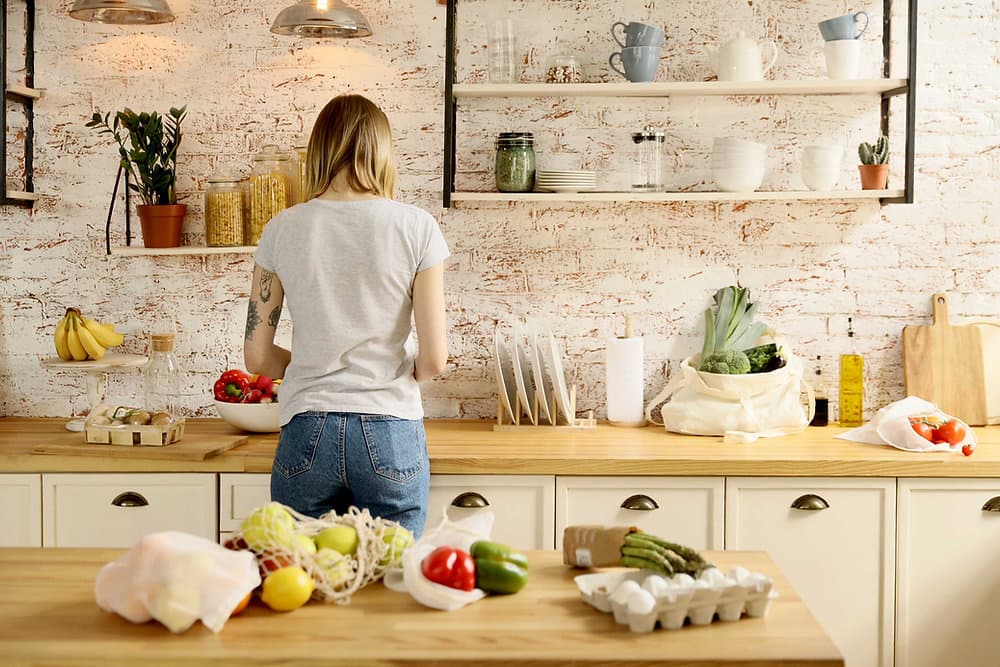
We spend more time inside our homes than almost anywhere else. We sleep there, eat there, work there, recover there. And yet when we talk about interior design, the conversation almost always gravitates toward two things: how it looks and what it costs. Rarely do we talk about how it feels -- not aesthetically, but physically.
How the spaces we inhabit every day are quietly influencing our bodies, our energy, our breath, and our sleep?
The health of a home has a direct impact on the physical health of the people living in it. Most of us don't register the micro-effects in real time -- a low-grade headache from afternoon glare, shallow sleep from a room that never fully darkens, a persistent fatigue that lifts the moment you open a window. These aren't coincidences. They're design problems.
There are five areas I return to on every project, each grounded in the same underlying question: How will this impact the lives of the people inside this space?
Good design is design for the senses. And our senses are more vulnerable than we give them credit for.
01 - Sun Path
Every home has to contend with the direction of the sun. In the best cases, a home was thoughtfully oriented with solar movement in mind from the start. In most cases, it wasn't considered at all.
Your body follows the path of the sun whether your home supports it or not. Ideally, your bedroom faces east so you rise with natural light rather than against it. The kitchen and dining areas face south to capture the most daylight across all three meals. The living room faces west so the evening light carries you naturally into rest. When a home is oriented this way, it works with your circadian rhythm rather than against it. When it isn't, you're fighting your own biology every day without knowing it.
This doesn't mean every home needs to be rebuilt from the ground up. It means being strategic about how rooms are used, where light is introduced, and how window treatments are designed to work with the sun's movement rather than simply block it out.
02 - Air Circulation
Fresh air is not a luxury. It is a biological requirement, and one that most homes chronically underdeliver on -- especially in colder climates.
Anyone who has lived through a Northeast winter knows the particular staleness that sets in by February. The skin is dry, the air is flat, everything carries a faint trace of dog and last night's dinner. And then one afternoon in early March the temperature climbs just enough to crack a window, and that first wave of cold, clean air moves through the house like a reset. The difference is immediate and visceral.
To address what we can't solve by opening windows year-round, there are now ERV systems -- energy recovery ventilators -- that continuously cycle fresh air into the home while regulating humidity levels and recovering the energy from outgoing air so you're not heating or cooling the outside. Homes with these systems are genuinely healthier environments. It's one of the highest-impact investments you can make in a home that isn't visible in a single photograph but is felt every single day.
03 - Chromotherapy
Color therapy, or chromotherapy, is the use of color wavelengths to influence mood and physiological state. It has roots in ancient healing traditions and has been studied in modern clinical and environmental psychology. It is also one of the most underutilized tools in residential design.
Different colors carry different energetic frequencies, and the research broadly supports what many designers have known intuitively for years:
Green supports balance and a sense of calm connection -- it's not a coincidence that time in nature is restorative.
Blue slows the nervous system, lowering heart rate and promoting peace.
Purple activates intuition and imaginative thinking, making it well-suited to creative spaces. Red increases energy, passion, and physical stamina -- used deliberately, it can be activating; used carelessly, it's agitating.
Orange stimulates creativity and productivity, a strong choice for studios and workspaces. - Yellow lifts mood and evokes warmth and happiness, though in high saturation it can tip into anxiety.
The goal is never to paint every room a different color of the rainbow. It's to understand what a space needs to do for the people using it, and let that inform the palette from the start.
04 - Materiality
The materials inside your home are in constant contact with your body and your air. They are not neutral. At their best, materials are genuinely life-giving.
Wood is grounding -- there is real research behind the Japanese practice of Shinrin-yoku, forest bathing, and the physiological calm that natural wood surfaces can produce indoors.
Wool is thermoregulating, naturally resistant to mold and dust mites, and has a tactile warmth that synthetic alternatives simply don't replicate.
Stone is cooling and enduring. Linen breathes. These materials have been used for thousands of years because they work with the human body, not against it.
At their worst, materials are a source of chronic low-level toxicity. Many conventional building materials and furnishings -- certain composite woods, synthetic textiles, vinyl flooring, some paints and adhesives -- off-gas volatile organic compounds (VOCs) that accumulate in interior air over time. The effects are rarely dramatic enough to identify as a single cause, but they contribute to fatigue, respiratory irritation, headaches, and disrupted sleep in ways that are easy to dismiss and hard to trace.
Sourcing materials with intention isn't just an aesthetic choice. It's a health decision. I go deeper on specific recommendations -- what to invite in and what to leave out -- in a dedicated post linked here.
[Read: What Your Home Is Made Of Matters]
05 - Programming and Circulation
Programming is the design term for how a space is used -- what activities happen in which rooms, what those rooms need to support, and how flexible or fixed those functions should be. Circulation is how you move between them.These two elements shape your physical experience of a home more than almost anything else.
A kitchen that requires twelve steps to get from the refrigerator to the stove is an ergonomic tax paid three times a day.
A bedroom separated from the noise of a main living area by two closed doors sleeps differently than one adjacent to it.
A mudroom that flows directly from the garage into the kitchen means wet coats and muddy boots never enter the main house.
A home office positioned away from the primary social spaces of the home creates actual psychological separation between work and rest.
Good circulation design also means thinking about movement itself -- not just efficiency, but the quality of how you move through a space. Wide hallways, unobstructed pathways, intuitive flow from one room to the next. When a home is programmed and circulated well, it supports your physical patterns rather than working against them. When it isn't, the friction is invisible but constant.
The homes we live in are doing something to us every day. The question is whether that something is working in our favor. These five areas -- sun, air, color, materials, and movement -- are where thoughtful design has the most direct and lasting impact on physical wellbeing. They don't always show up in the final photography, but they are felt in every ordinary moment of life inside the space.
If you're thinking about how your home could be working harder for your health, I'd love to start that conversation.
Love, Sav
Let's Chat!

From the Studio
Savannah Dodge
Savannah Dodge is the Chief Executive Officer and Principal Designer of Curio Studio. She earned her BFA in Interior Design from the New England School of Art & Design at Suffolk University and brings over a decade of experience designing thoughtful, layered homes.
More about the studioMore from the journal
May 20, 2026
Why the Entryway Is the Most Honest Room in the House
You come home at the end of a long day and the entryway tells the whole story before you've taken your coat off. The bag…
Read →
April 8, 2026
Dog-Friendly Interior Design: What to Consider in Every Space
Growing up, I often felt more connected to the animals in my life than to many of the people I met. I spent my childhood…
Read →
February 25, 2026
Reclaiming Our Ecological Relationship to the Sun
Before there were buildings, there was light. Our biology was shaped under open skies. Long before architecture, before…
Read →